
What does 240 tons of steel look like 143 meters high?
When will a staircase become a museum artwork?
And how can a tower become a jewel of Budapest?
In the report below, you will not only get a full picture of how this impressive steel crown was created – from the preparatory phase to the handover –, but also an insight into why we can be proud of this achievement.
Click and read more about how we built the tower of the MOL Campus, the tallest building in Hungary.
This is how we built the tower of Hungary's tallest building
MOL Campus, with its 143 meters, has become the tallest building in Hungary. It was officially handed over in December 2022, and it is expected to open its doors to the public from the spring of 2023. The peaked tower building, with no less than 4 underground and 28 above-ground levels, gives us enough reason in itself to be proud of it. For KÉSZ Metaltech, however, this pride has deeper roots. Because every time we look up at the top of the MOL Campus, the 240 ton steel crown, it is our collective, dedicated work that looks back at us.
The general contractor, Market Építő Zrt., entrusted us, KÉSZ Metaltech Kft. with the complete design, production and on-site construction of the steel and roof structure of the MOL Campus tower. All of this represented another professional challenge for us, which only intensified when looking at the figures. During the construction of the building, which covers a net floor area of 86,000 square meters, 900 tons of steel were installed, and the number of steel production plans reached 20,000 pieces. During the planning, however, they were not the only ones that put our company to the test.
Aesthetics and Steel Structure
During the MOL Campus project, our main tasks were the construction of the "crown" of the above-mentioned tower, the steel structure of the podium building part, and the aesthetic coverings, as well as the design of the roof layer order. The steel structures were manufactured by KÉSZ Ipari Gyártó Kft., while the production planning of the steel structures, as well as the nodal calculations to be developed in the framework of the production planning, were carried out by the permanent strategic partner of KÉSZ Group, bim.GROUP Kft. bim.GROUP also assisted in the design of the support structure - in addition to the Dutch partner team, Scheldebouw B.V. In continuous cooperation, we modified the geometry of the original steel and cladding, so we achieved an optimal steel structure geometry and a more regular cladding during the implementation.
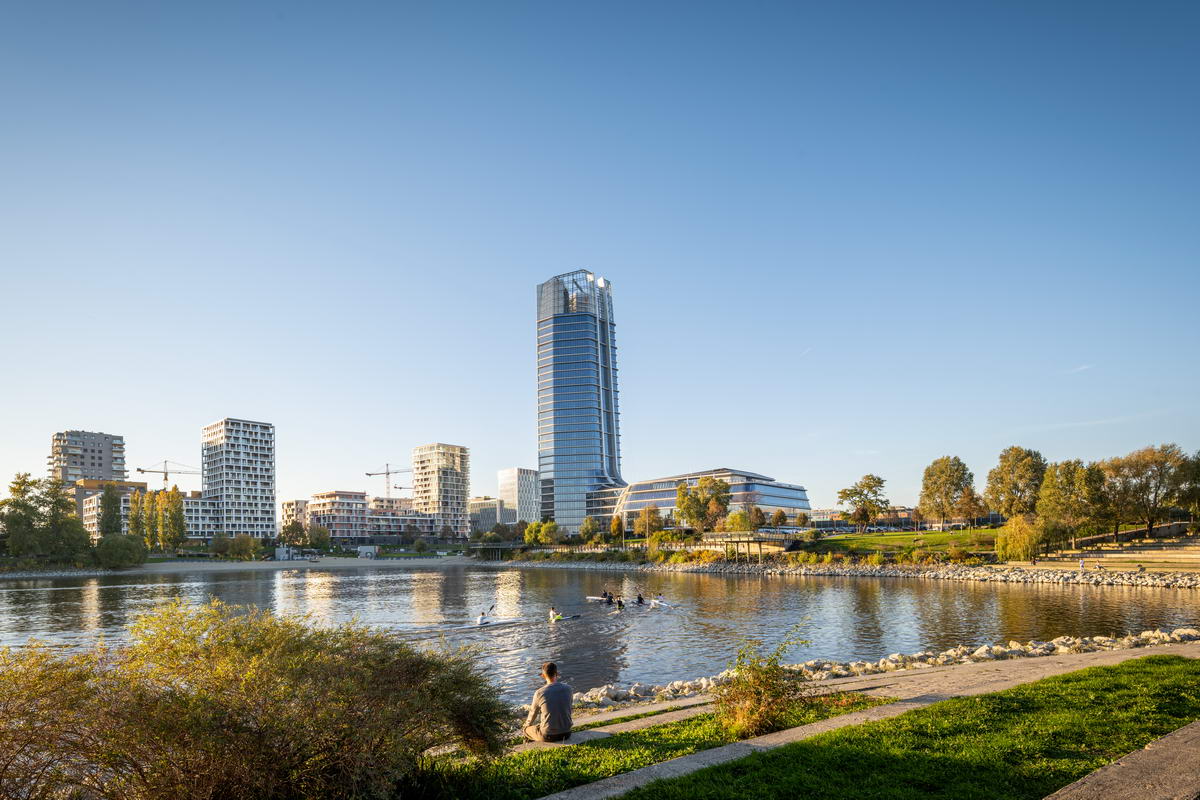 The key to the steel structure of the tower, its successful production and execution, was precise, thorough preparation work. The load capacity of the tower cranes primarily determined the assembly and production units. However, the height of the building made it difficult for us to develop the installation technology. The often unpredictable meteorological conditions also posed a challenge, which we had to constantly pay attention to. We prevented the possible problems arising from this by creating a technology in parallel with the design of the auxiliary structures, which guaranteed the provision of an immediate assembly break, thus preparing for unexpected circumstances.
The accurate tracking of roof geometry, alternation of thermally insulated and non-thermally insulated layers, complexity of nodes (including 3D design) , as well as meeting high aesthetic requirements were among the biggest challenges during the design. If we only rely on the figures arising during the planning, then the superstructure of the MOL Campus consists of two dilatation units. One is the podium, which includes the ground floor, five floors and the mechanical level. The other one is the tower itself. As mentioned above, the total height of the tower is 143 meters, which consists of the ground floor and a total of 28 floors, as well as the roof terrace, the mechanical levels and the crown structure covering the latter.
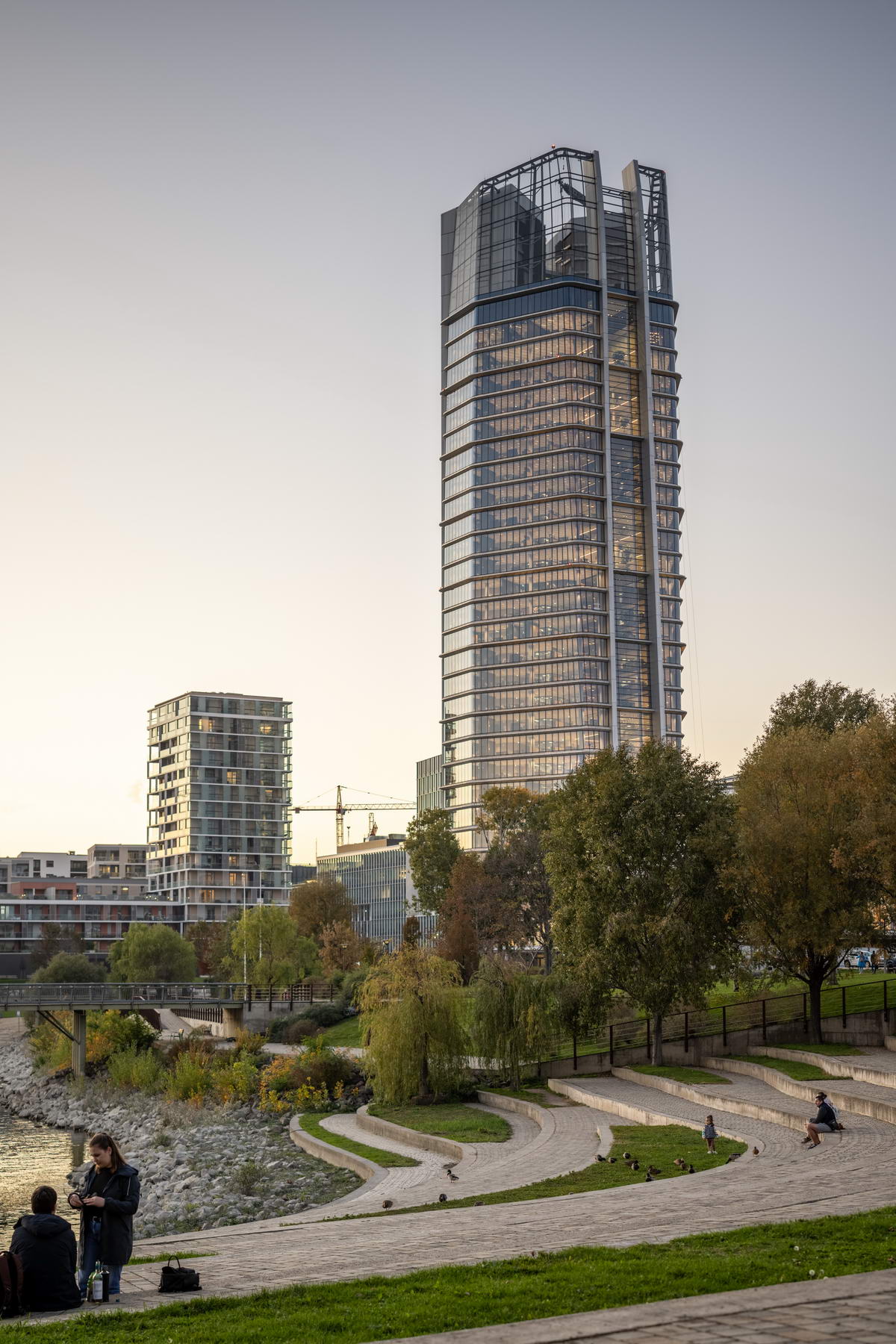
It was also a great challenge to be able to create a structure that meets the above-mentioned criteria from an aesthetic point of view as ordered by the investor. We had to fulfill the expectations of the inaccuracy of the structure below the permissible level (according to the standard), mainly to facilitate the work of the subsequent professions. Since we had to reach the end point of the assembly stage even in the event of the passenger elevator raised to the 28th floor being disabled due to the increase in wind speed, we employed our own installation teams who have alpine technology qualifications. For this reason, it was very important to precisely ensure that the products were securely fixed.
The Crown and Economical Production
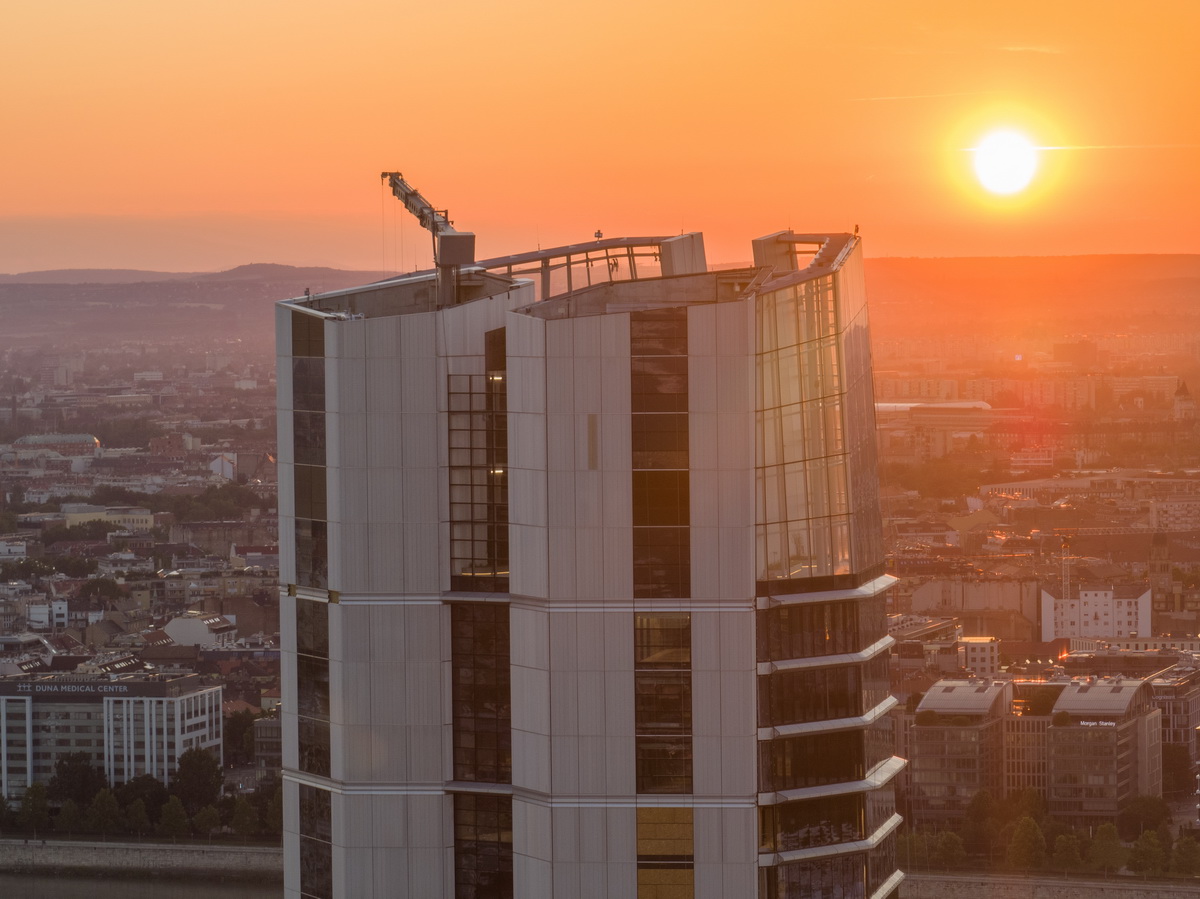
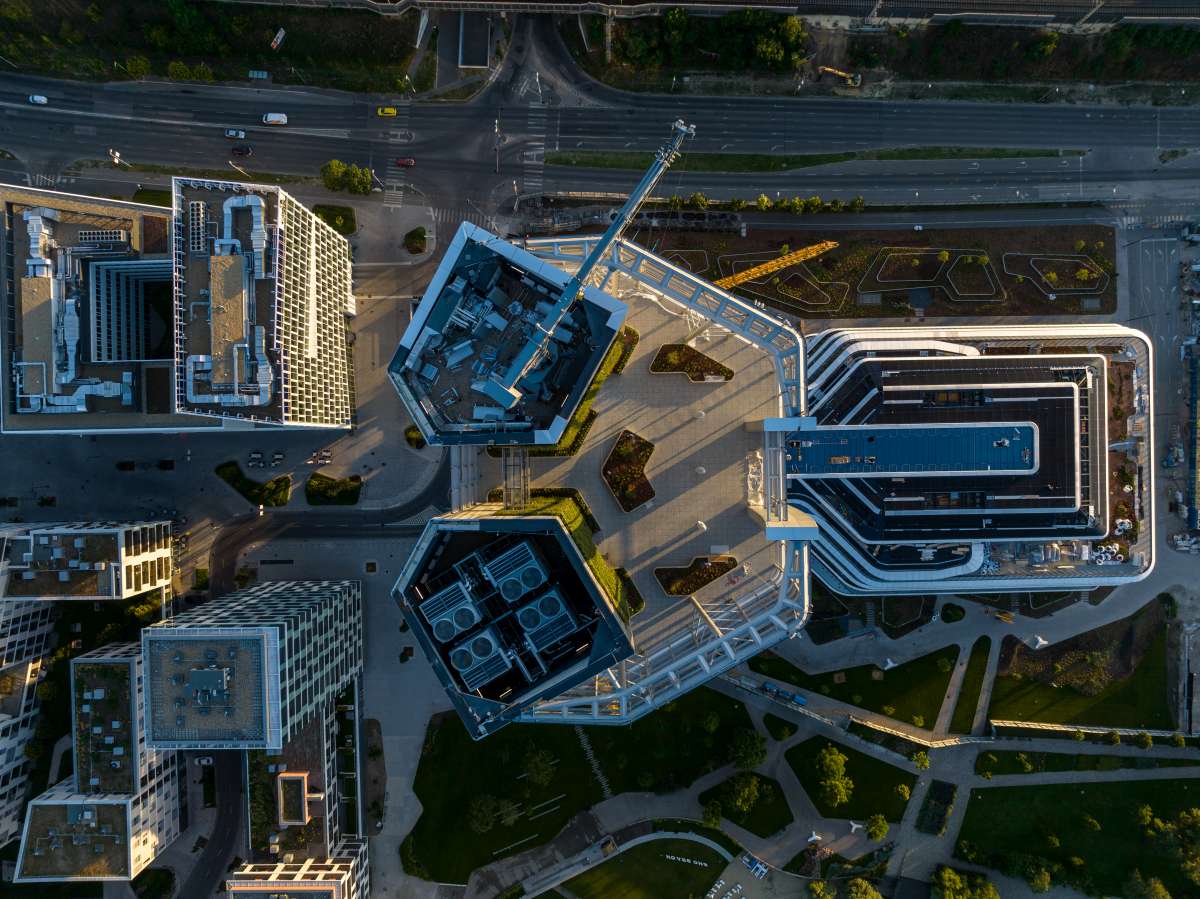
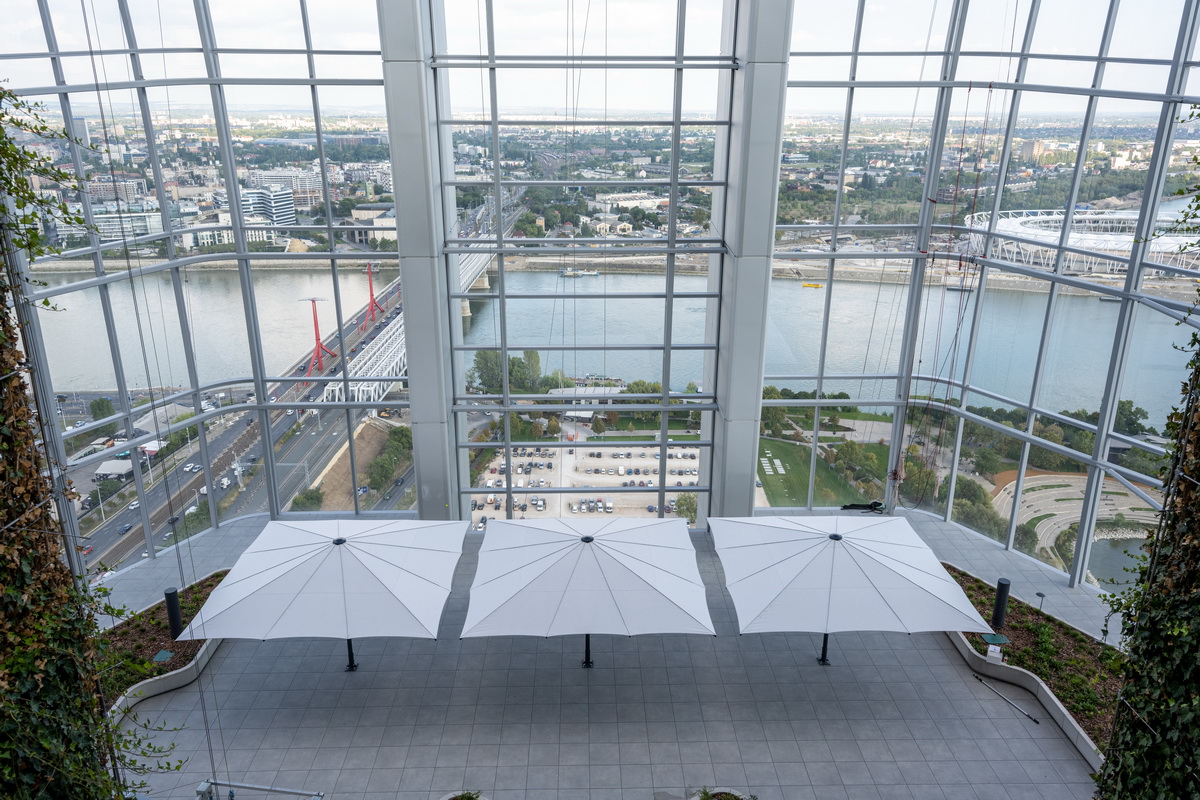
At the top of the tower, the steel structure of the crown is exactly 24 meters high. The observation deck is open at the top, while the steel structure is surrounded by an additional aluminum wall frame system with paneled glass structures matching the general levels of the tower. Being a visible structure, it was a special aesthetic demand that the constructed steel structure nodes should be covered and that the structural steel profiles should be visible.
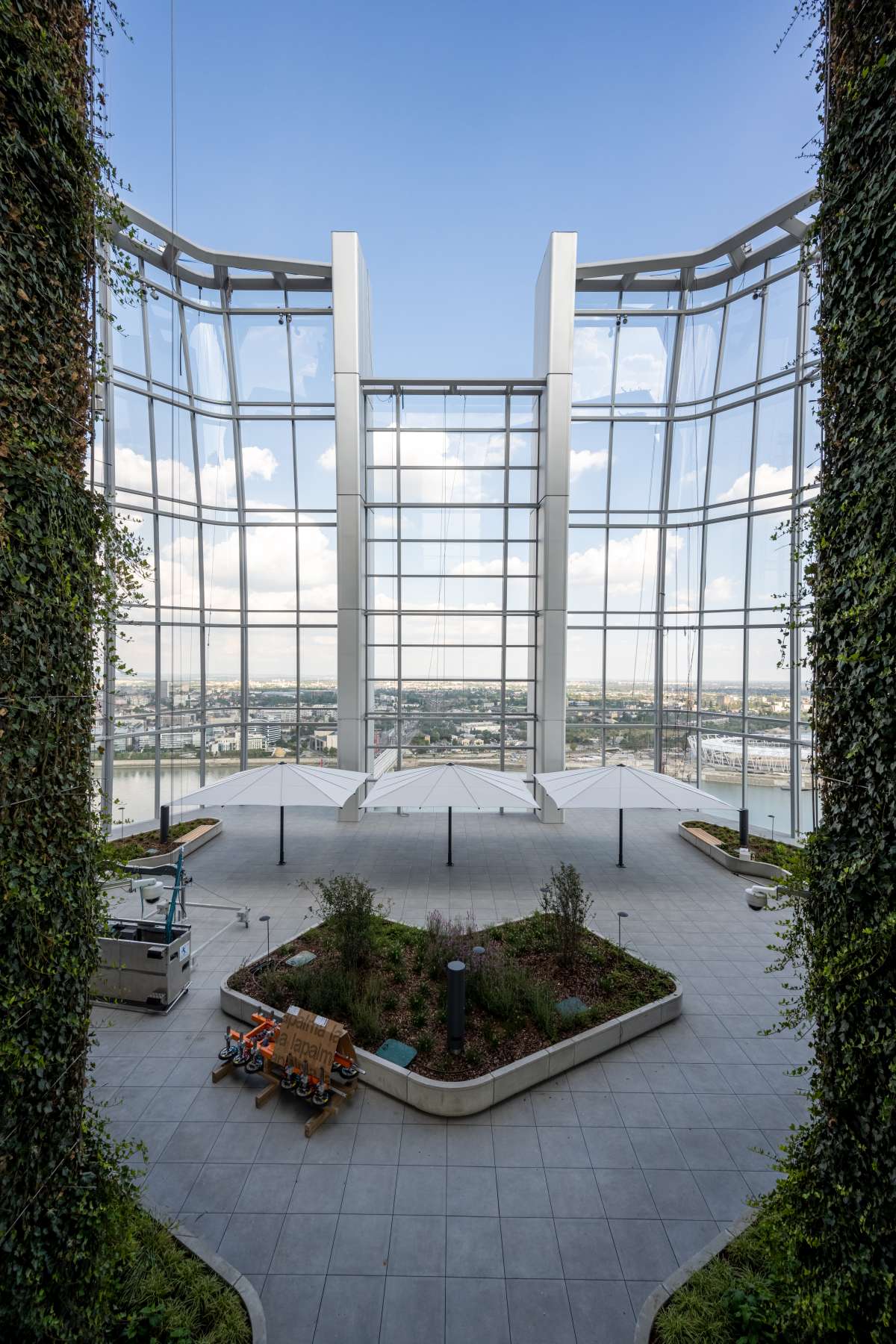
Thanks to the completely unique spatial shaping, the crown is a structure with a complex geometry, which has both planar and spatial tilts. The production lead time can be significantly reduced in the case of this type of structure, with geometric optimization and unification of a large number of elements. Therefore, more economical production is also possible. Before starting the steel structure manufacturing design, we revised the execution plan, and taking manufacturability aspects into account, we made a proposal to optimize the wall frame system.
In addition to the tower, we also installed a complex steel structure in the part of the MOL Campus podium building part. Unlike the construction of the tower's steel structure, height was not the biggest challenge for the podium structure. Since we were able to work at a low absolute height, we were able to implement significantly faster and less risky installation. We used personal lifting machines during the installation, and of course we complied with occupational safety measures every single working day.
With Parametric Design for Optimization
Parametric design was an essential tool for our efficiency. With this, we achieved that the wall frame beams could be laid out on a flat roller bed. Each curved part was made with the same bending radius, and several elements were formed with the same geometry and thus in a large number. In the case of the latter, the markings of the individual elements are the same even for different products, which significantly reduces the programming and technological transition, and facilitates the preparation and assembly of products.
Since we worked at a fast pace on this project as well, we had to solve the elimination of errors immediately, without wasting time. As for the production of the optimal steel structure, we used parametric planning for this as well. The parametrically produced steel network was connected to the Tekla Structures software using the Grasshopper-Tekla Live Link plugin, thus, we also created the production design model parametrically. This connection is real-time throughout, which allows the parametric code to be visually self-checked immediately.
With such a design method, it is not necessary to involve a Tekla modeling colleague until the 2D product and component designs are created, the modeling is done by the parametric designer. In this parametric environment, we also have the option of integration with finite element software, parametric finite element models can also be generated in real time using a similar principle (e.g. Consteel model through the Pangolin plugin).
Using Grasshopper, steel-steel and steel-reinforced concrete junctions with spatially variable geometry were created by just a few properly parameterized Tekla user macros. Practically, all this means that in half of the entire wall frame system, each parametric node was responsible for no less than 30 wall frame column-wall frame beam nodes of the same principle design, for the cladding elements placed on the same nodes, as well as for 85 nodes between the glass and steel structure, which also have the same principle design. The half wall frame system could be mirrored by specifying the mirror symmetry.
The Staircase as a Form of Art
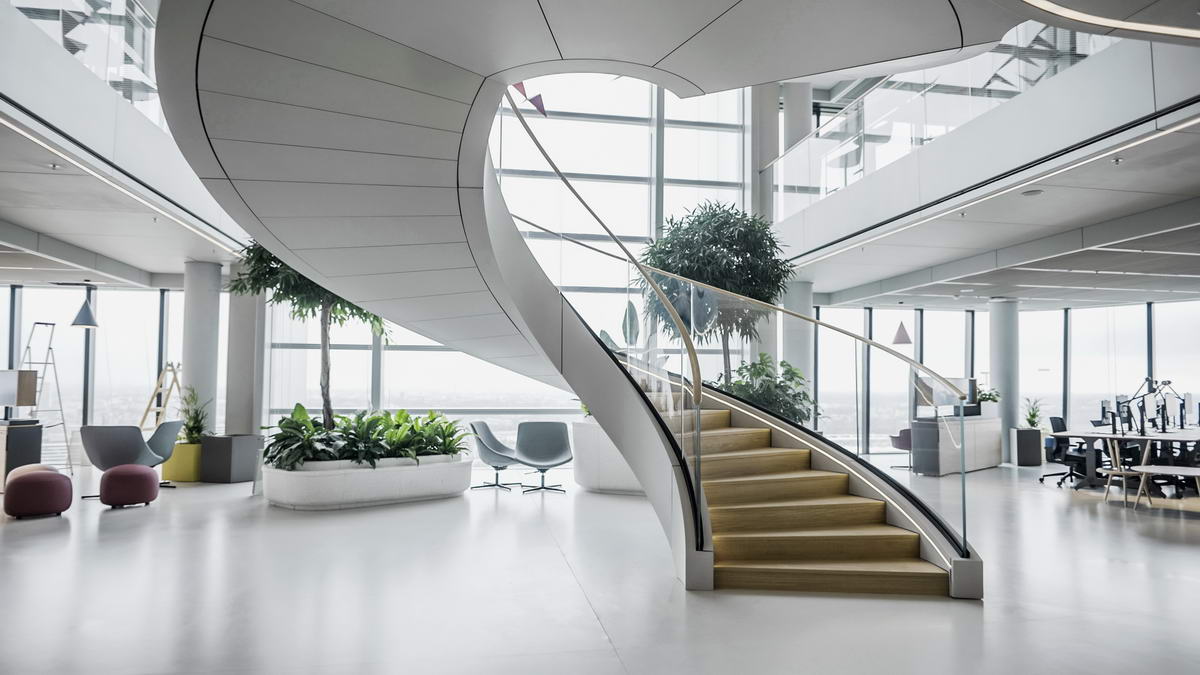
Finally, during the construction of the MOL Campus tower, we must also mention the sheet covering of a total of 8 (6 double-story and 2 single-story) spiral staircases. Antal Fekete, a member of the professional board of the Finta Architectural Studio and the Hungarian Chamber of Architects, called these stairs "sheet metal sculpture". We will now tell you why he is right.
It is technologically very complicated and difficult to construct such spatial elements. For the sheet covering of the spiral staircase, we designed, manufactured and installed 844 completely unique sheet covering elements after the on-site surveys. During the surveys, we also had to use HoloLens modeling, which was needed above all (in addition to the basic plans) because the steel structure and glass railing showed some differences in practice compared to the plans. In this extremely complicated 3D shape that bends and curves in all directions of the space, even the smallest deviation would have reflected a completely different final result at the end of the construction.
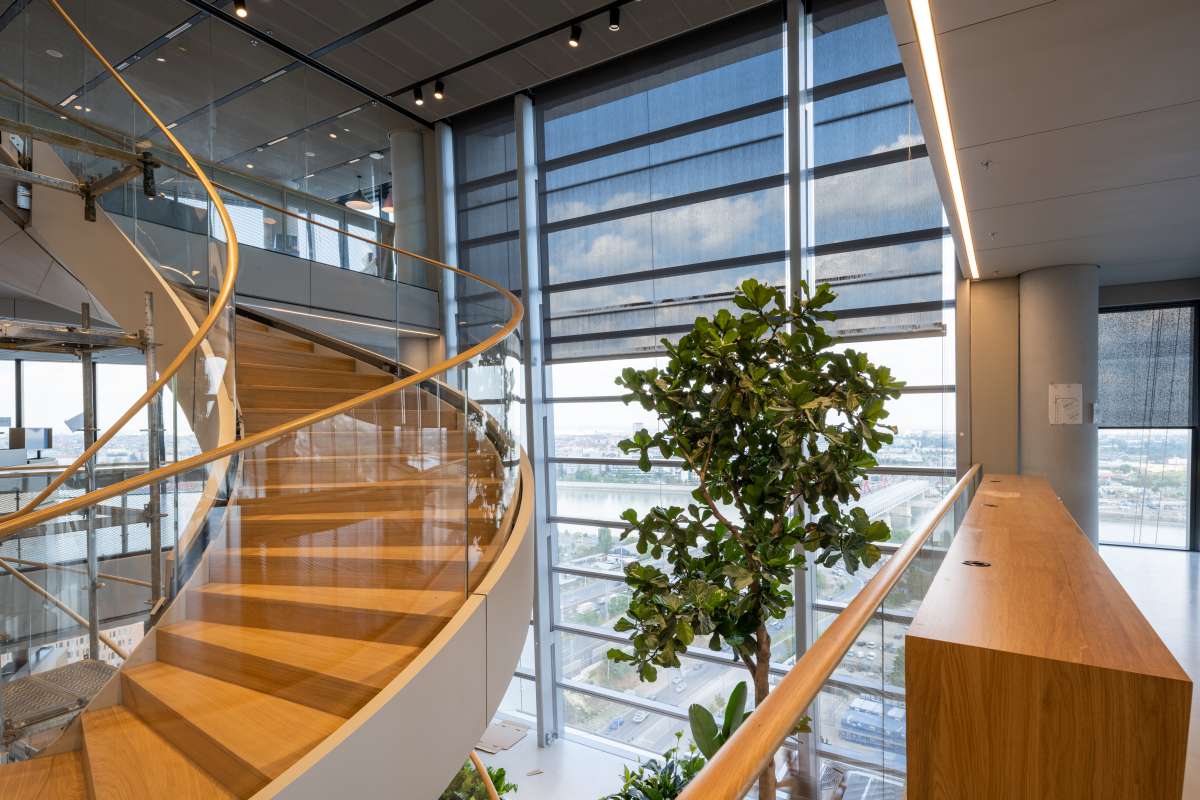
In addition to the already installed steel support structure, the cladding elements had to be fitted to a 3D point cloud. For this, it was necessary to map the 3D elements to 2D production plans, and create individual support templates for each step for modeling – all this with a millimeter deviation tolerance. The key to solving the task is clearly to be found in the coordinated, creative work of the designer, manufacturer and contractor colleagues, who, moving from level to level, often worked together long into the night. But we can reap the fruits of their labor together.
Nothing proves the unparalleled performance of the construction of the 8 spiral staircases more than the fact that you cannot find another staircase of this design or covering solution on this continent. Only in the Louvre in Paris can we find a structure with a similar shape, but with covering solutions that are much simpler from the aspect of their structural elements and implementation. Therefore, in addition to the already unique MOL Campus tower, another curiosity was born in this country.
The MOL Campus has become not only the tallest building in Hungary, but also one of our most outstanding projects, which we are extremely proud of! The building's Visitor Center and viewing terrace, i.e. the crown of the tower, are expected to be open to the public from the spring of 2023.